Why Multi-Channel Marketing Examples Matter for Your Business
Examples of multi channel marketing are everywhere — from Amazon flooding your inbox before Prime Day to Starbucks letting you order on your phone and pick up in store without missing a beat.
Here are some of the most well-known examples at a glance:
| Brand | Channels Used | Core Goal |
|---|---|---|
| Amazon | Email, app, social media, on-site banners | Drive Prime Day sales |
| Starbucks | Mobile app, email, in-store, social | Loyalty and repeat purchases |
| Apple | Retail stores, website, keynote events, email | Product launches and brand experience |
| Nike | TV, Instagram, retail displays, mobile app | Brand awareness and community |
| Coca-Cola | Packaging, social media, in-store, TV | Viral engagement and sales lift |
| Maggi | TV, print, digital recipes, in-store sampling | Community building and brand love |
Most customers don’t buy after seeing just one ad. In fact, nearly 75% of retail customers engaged on multiple channels before making a purchase, according to Harvard Business Review. That means your website, social media, email, and in-store presence all work together — or they work against you.
The brands that get this right don’t just show up everywhere. They tell a consistent story everywhere. And the payoff is real: businesses that keep their branding consistent across channels see a 10–20% uptick in revenue.
This article walks you through real-world multi-channel campaigns — from global giants to a local-style Maggi approach — so you can pull out what actually works and apply it to your own business, even without a big marketing team.
What is Multichannel Marketing and Why Does It Matter?
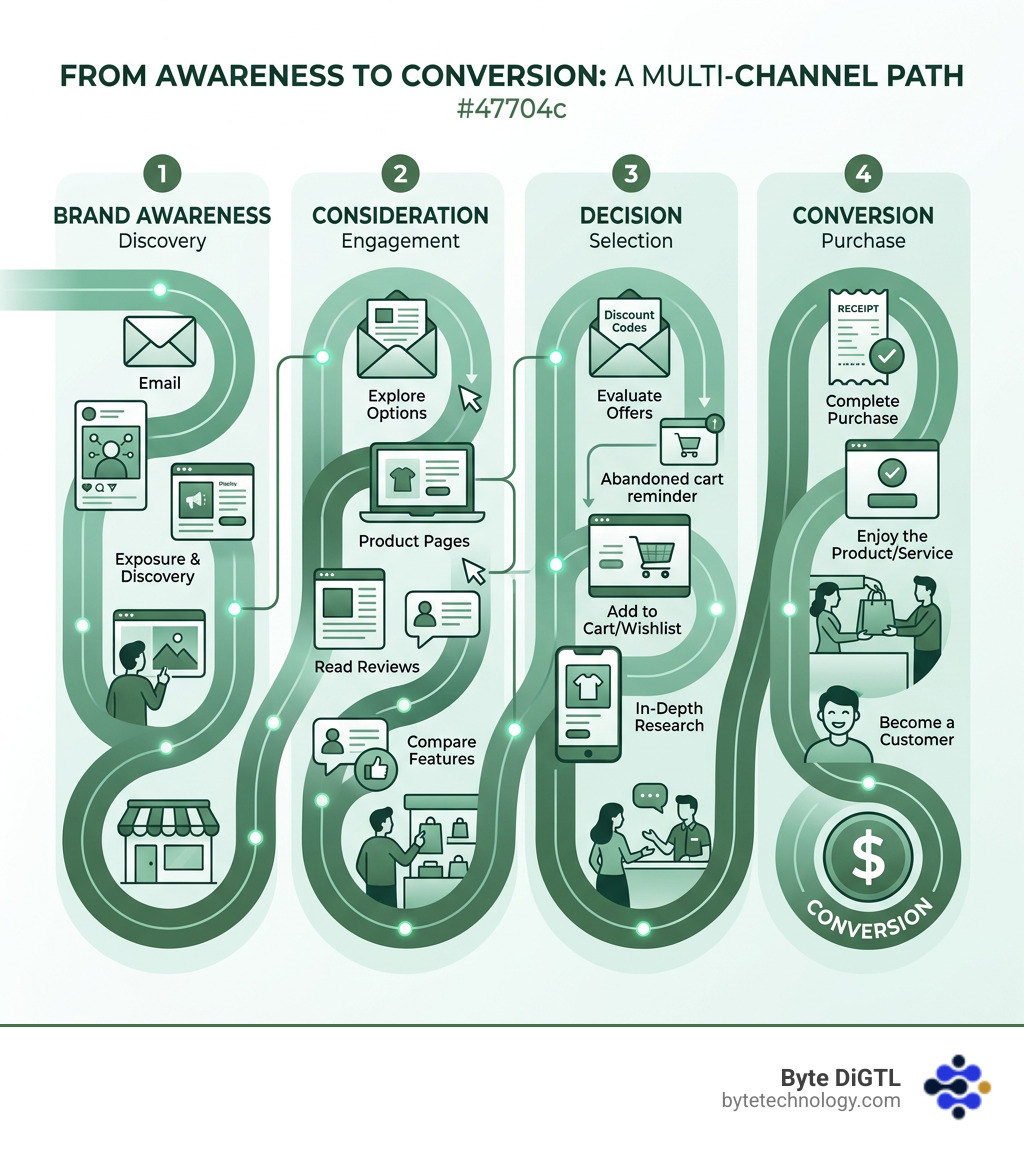
At its heart, multichannel marketing is the practice of interacting with customers using a combination of indirect and direct communication channels. Think of it as giving your customers the power of choice. Whether they want to find you through a Google search, an Instagram ad, a physical retail store, or a direct mail catalog, you are there to meet them.
We often say that multichannel marketing is a bit of a “no-brainer.” Why? According to research from Digital Doughnut and EPiServer, 95 percent of marketers agree that taking a multichannel approach plays an important role in achieving their business goals. If you aren’t where your customers are, your competitors certainly will be.
But it’s not just about being “present.” It’s about the massive impact on your bottom line. Harvard Business Review found that nearly 75% of retail customers engaged on multiple channels before making a purchase. These customers aren’t just browsing; they are higher-value shoppers. Data shows that multichannel customers spend roughly 10% more online and 4% more in-store than single-channel shoppers.
The key to making this work is consistency. Businesses that consistently maintain their brand enjoy a 10-20 percent uptick in revenue. When we help clients develop a marketing branding strategy, we focus on ensuring that the “vibe” and message of the brand stay the same, whether the customer is reading a tweet or walking through a front door.
Multichannel vs. Omnichannel: Understanding the Difference
You might hear the terms “multichannel” and “omnichannel” used interchangeably, but in professional marketing, they mean very different things.
Multichannel marketing is about reach. It’s like having several independent spokes on a wheel. You have a social media team, an email team, and a retail team. They all do great work, but they might not always talk to each other. The customer can buy from any of them, but their experience might feel a little fragmented.
Omnichannel marketing is about integration. It takes those spokes and connects them with a central hub of data. In an omnichannel world, if a customer puts an item in their cart on your website but doesn’t buy it, they might see an Instagram ad for that same item an hour later, and then receive a personalized coupon via email the next morning.
| Feature | Multichannel Marketing | Omnichannel Marketing |
|---|---|---|
| Primary Focus | The Channel (Quantity) | The Customer (Quality) |
| Data Flow | Siloed (Separate) | Integrated (Connected) |
| Consistency | Variable across platforms | High; seamless experience |
| Personalization | Basic | Advanced; data-driven |
The goal of omnichannel is to remove the “seams” in the customer journey. For example, the integration of SEO and social media marketing allows a brand to ensure that the keywords people use to find them on Google are the same themes they see reflected in their social feeds, creating a unified mental image of the brand.
Iconic Examples of Multi Channel Marketing Campaigns
To truly understand how this works, we need to look at the heavy hitters. These brands have mastered the art of being everywhere at once without annoying their audience. They use examples of multi channel marketing to build ecosystems rather than just running ads.
Amazon: The Prime Day Multi-Channel Blitz
Amazon Prime Day is a masterclass in manufacturing urgency. It isn’t just a sale on a website; it’s a global event coordinated across every digital touchpoint imaginable.
- Email Marketing: Weeks before the event, Amazon begins sending “sneak peek” emails tailored to your browsing history.
- Mobile Notifications: If you have the Amazon app, you’ll get real-time alerts when a “Lightning Deal” is about to go live.
- On-Site Banners: The entire homepage transforms into a countdown clock, creating a “don’t miss out” psychology.
- Influencer Partnerships: Amazon leverages thousands of influencers to share their “Prime Day Picks” on TikTok and Instagram, driving external traffic back to the platform.
The result? A multi-billion dollar “holiday” created out of thin air through sheer channel coordination.
Maggi: Building Community Through Recipes
Maggi (owned by Nestlé) is a fantastic example of a traditional brand that successfully moved into the digital age. They don’t just sell noodles; they sell “the solution to dinner.”
- Television Commercials: These focus on the emotional connection of family meals.
- Digital Recipe Hubs: Maggi’s website is a massive repository of quick recipes, which helps them rank highly in search results when parents are looking for “10-minute dinner ideas.”
- Social Media Contests: They encourage users to share their own recipe variations, effectively using user-generated content to build trust.
- In-Store Sampling: By giving people a taste in the grocery aisle, they close the loop between digital inspiration and physical purchase.
This approach is heavily supported by social media advertising, where they can target specific demographics—like college students or busy parents—with the exact recipe that fits their lifestyle.
Apple: Unifying Retail and Digital
Apple doesn’t just sell tech; they sell a lifestyle of simplicity and creativity. Their strategy is famous for its “Experience Centers.” According to Interbrand, Apple is the most valuable brand in the world, with a value of almost $323 billion.
- Experience Centers: Apple Stores aren’t designed for high-pressure sales. They are places to touch the products, get “Genius” advice, and attend workshops.
- Minimalist Web Design: The website mirrors the physical store’s clean, white aesthetic.
- Keynote Events: These live-streamed events turn product launches into global news, which is then immediately amplified through email and social media.
By keeping the messaging identical across their retail and digital arms, Apple ensures that a customer in Tokyo has the exact same brand experience as a customer in New York.
Starbucks: Mobile App and In-Store Synergy
Starbucks has one of the most successful loyalty programs in history. They have mastered the “frictionless” transaction.
- Mobile Ordering: You can order your latte on the train and have it waiting for you on the counter.
- Personalized Email Offers: If you haven’t visited in a week, Starbucks might send you a “We miss you” email with a “double star” reward offer.
- Real-Time Balance Updates: Your rewards balance updates instantly across the app, the website, and the in-store register.
This synergy makes the customer feel known. When a brand remembers your favorite drink and rewards you for buying it, you’re much less likely to switch to a competitor.
How to Build an Effective Strategy
You don’t need a Starbucks-sized budget to succeed with examples of multi channel marketing. You just need a solid plan. At Byte DiGTL, we believe that marketing plans should be rooted in data, not guesswork.
First, you must map your audience. Where do they hang out? If your customers are professionals, you might focus on LinkedIn and email. If they are Gen Z, TikTok and Instagram are non-negotiable.
Once you know where they are, you need to align your creative. This doesn’t mean posting the same image everywhere. It means adapting your core message to fit the “language” of each platform. For example, custom web development Google Ads campaign should be direct and benefit-driven, while an Instagram post might be more visual and storytelling-focused.
Essential Elements for Examples of Multi Channel Marketing Success
If you want your campaign to actually move the needle, it needs three things:
- Unified Messaging: Your “North Star” message must be clear. If you are the “affordable luxury” brand, that should be obvious on every platform.
- Platform-Specific Creative: Don’t just “spray and pray.” Rebuild your content to match how people use each platform.
- Data Synergy: Use your data from one channel to improve another. If a specific subject line kills it in an email, try using that same phrasing as a headline for a Facebook ad.
Almost 100% of marketers agree that taking a multichannel approach plays an important role in achieving their business goals. It’s the standard for modern business growth.
Tools for Executing Examples of Multi Channel Marketing
Execution requires the right tech stack. Without tools, you’re just throwing darts in the dark.
- CRM Systems: A Customer Relationship Management tool is your “brain.” It stores every interaction a customer has with your brand.
- Marketing Automation: This allows you to send the right message at the right time without manual work. This is especially vital for maximizing your business potential.
- Analytics Dashboards: You need to see which channels are actually driving revenue. Don’t just look at “likes”; look at conversions.
Did you know that 99% of people check their emails every day? Some check it over ten times a day! This makes email one of the most powerful “connective tissues” in your multichannel strategy.
Overcoming Common Challenges in Multi Channel Marketing
It’s not all sunshine and rainbows. Marketers face real hurdles when trying to manage multiple platforms.
- Data Silos: This happens when your social media team doesn’t know what your email team is doing. We solve this by using unified reporting tools.
- Attribution Modeling: It can be hard to know which channel gets the “credit” for a sale. Was it the first Instagram ad or the final Google search? Most successful brands use “multi-touch attribution” to see the whole picture.
- Message Fatigue: If you hit a customer with the same ad five times a day on five different platforms, they will get annoyed. You need to use frequency capping and smart retargeting.
- Resource Allocation: Small teams often struggle to keep up. This is where boosting your marketing ROI becomes essential—it allows you to focus your budget on people who have already shown interest, rather than wasting money on cold audiences.
Frequently Asked Questions about Multi-Channel Marketing
What is the most important channel in a multi-channel strategy?
There is no “single” most important channel, as it depends on your audience. However, for most B2B and ecommerce brands, email remains the powerhouse for conversions because it is a direct line to a customer who has already opted in. Search (SEO/SEM) is usually the most important for discovery.
How do I maintain brand consistency across different platforms?
The best way is to create a “Brand Style Guide.” This document should outline your brand colors, fonts, tone of voice, and logo usage. Only 30 percent of brands routinely enforce their own guidelines—don’t be part of that group! Consistency leads to that 10-20% revenue uptick we mentioned earlier.
Is multi-channel marketing suitable for small businesses?
Absolutely. In fact, it’s often more important for small businesses because it makes you look “bigger” and more established. You don’t have to be on 20 channels. Start with two or three—like a great website, an active Instagram, and a monthly newsletter—and do them exceptionally well.
Conclusion
The evidence is clear: examples of multi channel marketing aren’t just for the Amazons and Apples of the world. Whether you are a local boutique or a global SaaS provider, your customers are jumping between platforms, and they expect you to keep up.
Businesses that adopt these strategies see an average of 9.5% year-over-year revenue increase. But we know that managing all of this can feel overwhelming. Between SEO, social media, web maintenance, and email automation, there just aren’t enough hours in the day.
That’s exactly why we created Byte Bundles. At Byte DiGTL, we provide specialist teams that act as your external marketing department. You get the expertise of a full multi-channel team for a fraction of the cost of a single full-time employee. We handle the technical heavy lifting—from Magento and Shopify development to high-converting ad campaigns—so you can focus on running your business.
Ready to turn these examples into your own success story? More info about social media advertising services is just a click away. Let’s build something great together.